Man with van in Falconwood

Our man with van in Falconwood service is set up for practical moving work that needs a careful pair of hands, a suitable vehicle and sensible loading. It suits customers who want furniture, boxes or mixed household items moved without booking a full-scale removal operation. We keep the approach straightforward: assess the load, plan the route, protect the items and move them in a tidy, organised way.
This service covers local and longer runs for small home moves, single items, room contents and light commercial collections. It can also suit awkward lifts where planning matters more than volume. If you are comparing options, the key questions are usually what needs moving, how accessible it is and whether you need pricing and quotes before you decide. Clear information helps us shape the work and makes the quotation process more focused.
For a first conversation, it helps to note the main items, any access issues and whether there are stairs, lifts or restricted parking at either end. You do not need to write a long brief; a short summary is often enough to get started. If you want to move forward, contact us with the basics and we can talk through the most suitable arrangement.
What the service is suited to
Our removals support is designed for jobs that sit between a simple courier run and a larger household move. That might include a sofa, bed, appliance, boxed belongings or a few bulky pieces that need two people and a van with decent load space. Because the work is handled as a moving service rather than a collection-only run, the emphasis is on safe handling, sensible stacking and a finish that leaves items ready for the next stage.
We also help when a move is spread across a few rooms or has to be done in phases. Some customers need one van trip, while others need a carefully sequenced load so fragile or valuable items stay separate. If that is your situation, the important part is matching the vehicle size and loading pattern to the job rather than forcing everything into one generic plan. You can always read more about home moves if your move is mainly residential and you want to understand the scope in more detail.
Supported work often includes: moving household furniture, collecting items from storage, taking goods between flats or houses, transporting packed boxes, and supporting local relocations where a smaller van-based approach is more efficient than a large removals team. The exact setup depends on the load, the distance and how much help is needed at each end.
Packing, handling and preparation

Good preparation makes a van-based move much smoother, especially when furniture has to be protected and stacked efficiently. Packing does not need to be elaborate, but it should be secure. Boxes should be closed properly, loose parts should be gathered together, and items that scratch easily should be wrapped or separated. Packing and unpacking services can be useful where the job involves many smaller possessions or where you would rather hand over the organisation of the load.
When we load items, we work to keep heavier pieces stable and lighter items safe from crushing. Delicate finishes, glass and polished surfaces deserve particular care, and some objects are better transported upright than laid flat. If you are sending a mixed load, it is worth saying which pieces are most fragile, which ones can be dismantled and which ones should stay assembled. That sort of detail improves the plan without creating extra hassle for you.
The simplest way to prepare is to choose what is moving, make sure walkways are clear and keep keys, access codes or building instructions ready if they are relevant. A short list of key items can help, especially for time-sensitive moves where the order of loading matters. For larger or more structured jobs, it can also help to ask about removal services so you can see how different moving tasks fit together.
Household moves and room-by-room transport
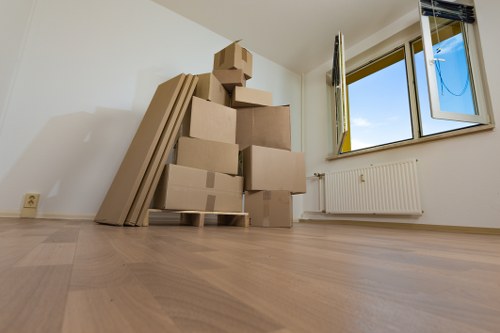
Many customers choose this service for small household moves that do not require a full lorry or a team of movers on a bigger schedule. A one-bed flat, an office spare room, student belongings or an overflow of furniture from a storage unit may all suit a van-based approach. The aim is to move what matters efficiently while keeping the process proportionate to the size of the job.
Some moves are better handled in stages, especially where the property is being emptied gradually or where furniture arrives before the rest of the belongings. We can move selected items first, then return for the remainder if that is the best fit for the plan. If your move is more involved, house removals may be the better page to review, because it describes a broader residential moving scope.
For loads that include a mixture of furniture and boxes, we aim to balance protection with efficiency. Softer items can help cushion harder ones, but only when they are packed properly and not at risk of being distorted. A move of this kind is often about control and care rather than sheer scale, so a measured loading order and clear instructions usually make a noticeable difference.
Commercial and office work
Businesses sometimes need a van-based move for desks, chairs, filing, stock or compact equipment. In those situations, the focus is usually on minimising disruption, keeping items together by area or department, and moving goods in a way that makes unpacking easier. Commercial moves are useful when you want a clearer view of how business items, small premises changes and mixed relocations can be handled.
Office work can require a slightly different method from a home move. It may involve labelled boxes, IT-related equipment, awkward storage units or furniture that needs dismantling and rebuilding. We do not assume every office job is complex, but we do treat even a modest move with enough structure to avoid confusion on arrival. If your workplace move involves desks, light archive runs or a small suite of furniture, a van-based arrangement can often be a practical option.
When planning commercial work, it helps to identify which items must stay together and which ones can travel separately. That makes checking, unloading and placement easier at the destination. The best result usually comes from choosing a method that fits the premises rather than trying to force a larger moving model onto a smaller task.
Vehicle choice, access and load planning

The van matters because the right space, tie-down approach and loading height can make the difference between a smooth move and a frustrating one. A compact load may suit a simple van, while bulkier furniture or a fuller household transfer may need more room and a different stacking pattern. We work with the practicalities in mind so that items are arranged securely and access remains manageable at collection and delivery.
Access is another major factor. Ground-floor properties, basement flats, narrow staircases, shared entrances and parking restrictions can all affect how the move is arranged. The point is not to make the job sound difficult, but to handle it in a realistic way. If the route from property to vehicle is longer than usual, the load plan may need more thought, especially for heavier pieces or fragile items with awkward shapes.
A simple checklist can save time later:
- which items are definitely going
- whether anything needs dismantling
- if lifts, stairs or long carries are involved
- the preferred collection and delivery order
- any items that should never be stacked underneath others
About Falconwood
Falconwood is a residential area in south-east London, close to the boundary between the London Borough of Bexley and the Royal Borough of Greenwich. It is commonly associated with the Falconwood and Welling part of the wider suburban landscape, and much of its character comes from post-war residential development alongside older routes and patches of green space. The area is served by Falconwood railway station on the Bexleyheath line, which helps connect it with central and east London, while local roads link it with Eltham, Welling and the surrounding neighbourhoods. The Falconwood Shopping Centre and nearby local parades provide the day-to-day retail core, with cafes, convenience shops and services reflecting the area’s everyday suburban rhythm. To the north and east, the built-up streets give way toward larger open spaces and landscaped corridors, including access to stretches of parkland that form part of the wider Greenwich and Bexley green network. The locality sits within a part of London shaped by twentieth-century expansion, yet it still retains a distinct domestic scale, with schools, churches and local facilities woven into ordinary streets. Its position between boroughs means that Falconwood feels connected to several nearby districts rather than locked into one centre, and that mixture gives it a practical, lived-in quality rather than a heavily commercial one.
Furniture, bulky items and careful lifting
Some jobs are less about the number of boxes and more about the shape, weight or awkwardness of a few key pieces. Sofas, wardrobes, beds, white goods and garden items often need more attention than their quantity suggests. We handle these with a measured approach that considers turning space, grip points, dismantling where appropriate and protection against knocks during transit. That is especially useful when the item is valuable, bulky or difficult to manoeuvre through doorways.
Where needed, we can work with dismantled furniture, separated components and pieces that need reassembly later. A careful sequence reduces the risk of damage and makes the delivery easier to manage once items arrive. If you need a page focused on larger or more complex moving jobs, removal company gives a broader overview of the kind of work that sits around a structured move, while still keeping the service grounded in practical removals rather than theory.
Some customers ask whether it is worth moving one or two bulky pieces on their own. The answer usually depends on the item’s condition, the access at each end and whether the move needs extra care. When a piece matters to you, treating it as a planned move rather than an improvised lift is usually the safer option.
Pricing, timing and what affects the quotation

Quotation work is normally shaped by a few clear factors: the volume of items, the distance travelled, the access at each property, whether dismantling is needed and how much handling care the load requires. If the move is straightforward, the quote can be equally straightforward. If the job includes multiple stops, restricted parking or items that need special attention, the plan may need a more detailed look so the price reflects the actual work.
It also helps to know whether your move is one journey or part of a bigger sequence. A single load is easier to schedule than a move that has to be split between different times or locations. If you already have a list of items, photos or measurements, that can make the conversation more efficient, though it is not the only way to begin. The main thing is to share enough information for the move to be understood properly without overloading the enquiry.
If you are comparing options, you may also want to look at man and van for a closely related moving service and then decide which format suits your load best. For a quotation, simply send the essential details and tell us what needs moving; get in touch when you are ready and we can take it from there.
Planning a move with less stress
Most van-based moves go more smoothly when the items are grouped sensibly before collection. Heavy things should not be hidden under light ones, loose parts should be kept together, and anything that could spill, stain or snag should be secured before loading begins. That is not about making the job fussy; it is about avoiding preventable delays and protecting the items you want moved. A little organisation at the start usually saves time at the end.
It is also worth thinking about destination placement. If you know which room or area each item is going to, unloading becomes much easier and the van can be emptied in an orderly way. That matters for mixed loads, where furniture and boxes may need to be separated on arrival. For people who want help at both ends, a service like house removalists may offer another way to compare how residential moving support is described across the site.
We try to keep the service practical, respectful and adaptable to the shape of the job. Some customers need one item moved safely; others need a small home or office transfer managed with care. In either case, the goal is the same: a well-planned move that fits the load, the access and the time available, without unnecessary complication.